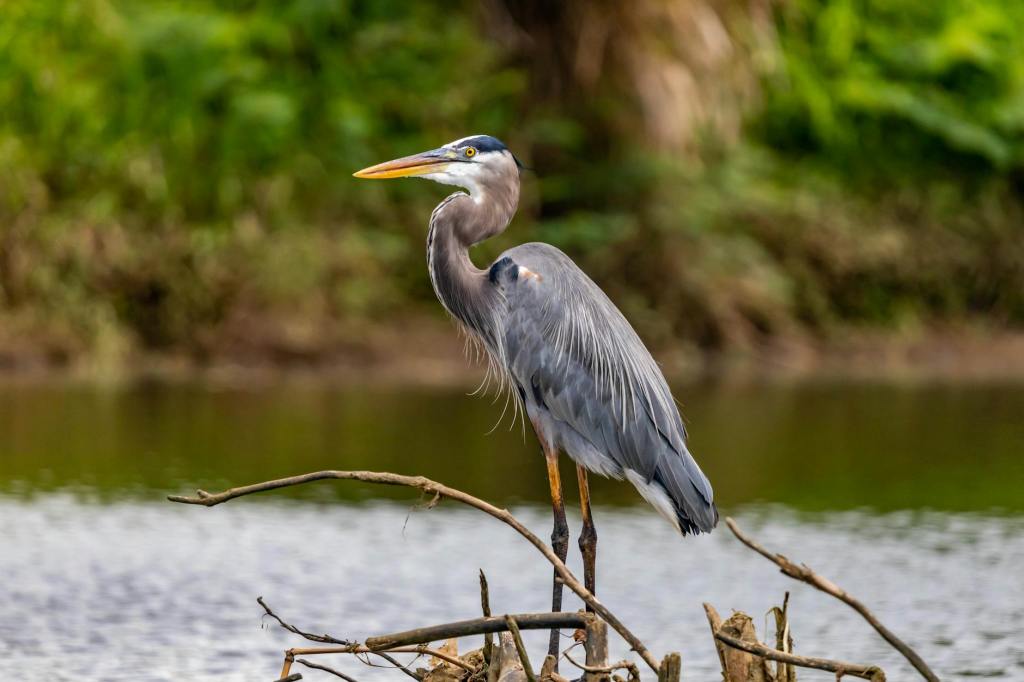
I had lost track of time when the fog just began to lift in that classic San Francisco way. And there it stood, set against a muddy backdrop near the tidal marshes: The Great Blue Heron of Crissy Field.
Crissy Field isn’t exactly the Everglades, so spotting a Great Blue Heron here felt like catching your high school math teacher at a punk concert? Like, unexpected, kinda surreal, but extremely gratifying. As the heron stood statue-still, poised to spear a field mouse with pinpoint accuracy (their strike speed is absurdly fast! About 90 milliseconds to grab prey), I found myself spiraling deep into the rabbit hole of heron lore.
Heronology 101 (The rabbit hole you didn’t know you needed)
Great Blue Herons (Ardea herodias, if you want to flex on bird-watchers with the Latin) aren’t picky eaters. Fish, frogs, snakes, small rodents….if it fits in their S-shaped neck, it’s on the menu. This bird literally embodies “eyes bigger than your stomach,” but they somehow pull it off without embarrassment.
They also have specialized feathers called powder down, which continuously break into a fine dust used for cleaning their plumage, removing slime after their aquatic hunting sprees. This is basically the bird equivalent of carrying around a mini lint-roller, except it’s built into their feathers. Nature’s engineering is impressive, especially when it involves hygiene rituals.
Why Crissy Field, Though?
Crissy Field, nestled right along San Francisco’s bustling northern shoreline, might seem like a questionable heron hangout. But actually, Great Blue Herons are surprisingly adaptable. They’ve figured out the perks of urban wetlands, brackish tidal pools, and even artificial ponds. It turns out this area offers a bounty of easy-to-snag fish, fewer predators (aside from overly curious photographers like myself), and a convenient commute from nearby nesting sites in the Presidio and Golden Gate Park. Smart birds…no Muni delays here.
Herons: Low-key dinosaurs?
If you squint just right, you’ll see that Great Blue Herons carry themselves like ancient dinosaurs, which, technically, they are. Birds are theropod dinosaurs’ last living descendants, and this heron’s calculated stare and predatory elegance are straight out of the Jurassic. If you asked me to picture a velociraptor fishing, it wouldn’t look much different from a Great Blue Heron patiently lurking beside a marsh.
TL;DR… But please read anyway because herons are amazing
In short: San Francisco, specifically Crissy Field, hosts one of nature’s most intriguing hunters: the Great Blue Heron. From their lightning-fast strikes, impressively long limbs, powdery self-cleaning feathers, and their “I was a dinosaur in a previous life” energy, these birds encapsulate what makes urban birdwatching surprisingly thrilling.
So next time you’re sipping your Blue Bottle coffee and strolling by the shore, keep an eye out! Because an ancient, elegant predator might just be standing quietly nearby, judging your lack of fish-catching prowess.
(Or maybe that’s just me anthropomorphizing again. Either way, herons are cool.)
Want a good book on Herons? Here’s one I love.
 Rena Birds
Leave a comment